


Who Are the Best Pain Doctors for Post-Surgical Patients in Wilkes-Barre PA?
At Comprehensive Pain Specialists, Dr. Youssef Josephson, DO, and his team assist patients in recovering from surgery, addressing post-operative discomfort and physical limitations, and helping patients regain their quality of life. For more information, contact us or book an appointment online. We are located at 1177 PA-315, Dolphin Plaza, Wilkes-Barre, PA 18702.
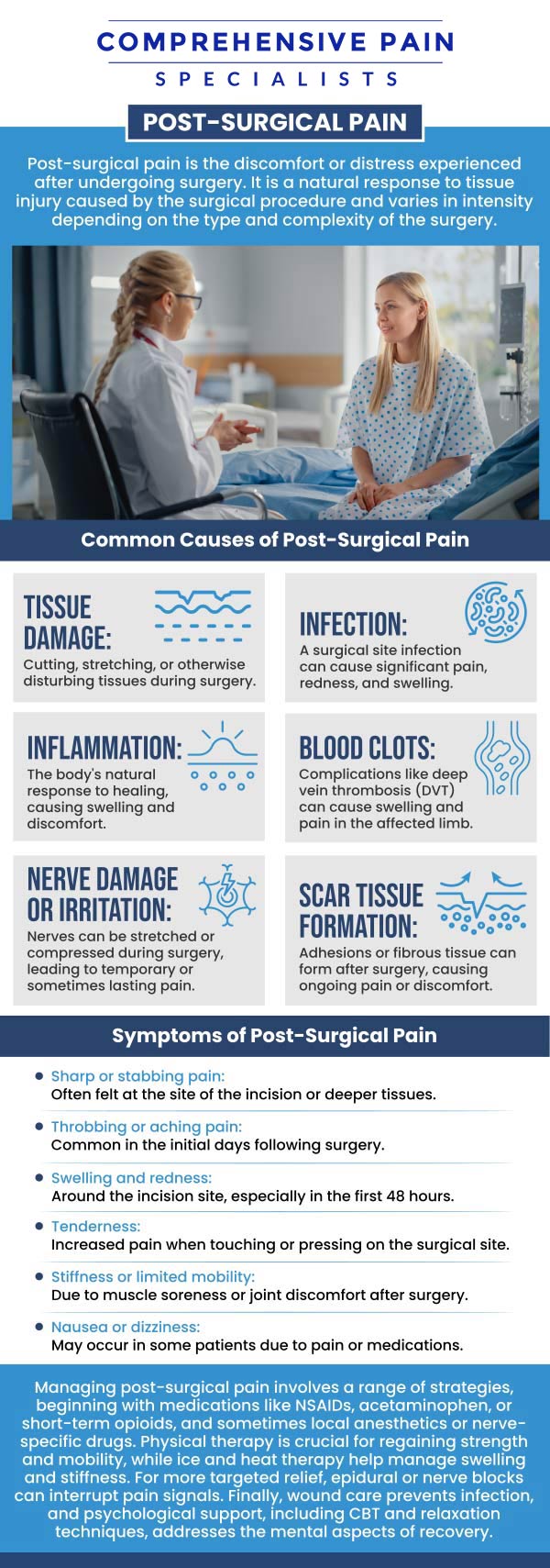
Table of Contents:
How can pain management help with recovery after surgery?
What are the most effective pain management techniques for post-surgical patients?
Are there any non-invasive options for managing pain after surgery?
How can a pain doctor customize a treatment plan for my post-surgical recovery?
Why choose the specialized care of Dr. Youssef Josephson, DO?
Pain management is not merely about comfort; it is a critical component of the physiological healing process. When pain is poorly controlled after a surgery, the body remains in a state of high stress. This stress response can lead to increased heart rate, elevated blood pressure, and a weakened immune system, all of which can delay the healing of surgical incisions and internal tissues.
Furthermore, effective pain management is the primary catalyst for early mobilization. Modern medical research consistently shows that the sooner a patient can move, walk, and engage in physical therapy after surgery, the lower their risk of developing complications such as deep vein thrombosis (blood clots), pneumonia, or muscle atrophy. By utilizing advanced pain management strategies, doctors enable patients to participate actively in their rehabilitation. This proactive approach reduces the likelihood of “splinting”—where a patient breathes shallowly or avoids movement to stay comfortable—thereby ensuring a smoother, faster transition back to daily activities.
The modern standard for post-surgical care is known as “multimodal analgesia.” This approach involves using a combination of different medications and techniques that work through various pathways in the nervous system to block pain signals. By using a variety of tools, doctors can often achieve superior pain relief while minimizing the side effects associated with high doses of any single medication.
Some of the most effective techniques include:
• Peripheral Nerve Blocks: These involve injecting a local anesthetic near specific nerves to “turn off” pain signals from the surgical site. This can provide profound relief for several days post-surgery.
• Epidural or Spinal Analgesia: Frequently used for major abdominal or orthopedic surgeries, these techniques deliver medication directly to the nerves in the spinal cord.
• Patient-Controlled Analgesia (PCA): This allows patients to safely self-administer small doses of pain medication through an IV at the press of a button, ensuring the level of relief matches the intensity of the pain in real-time.
• Pharmacological Interventions: Utilizing a mix of anti-inflammatories, muscle relaxants, and nerve-stabilizing medications to address the different types of pain (inflammatory, muscular, and neuropathic) that occur after an operation.
Many patients are understandably concerned about the use of heavy medications or further needles following a surgical procedure. Fortunately, there are several highly effective non-invasive or minimally invasive options that can significantly lower pain scores and improve the recovery experience.
One common non-invasive tool is TENS (Transcutaneous Electrical Nerve Stimulation), which uses a small device to send mild electrical pulses through the skin to scramble pain signals before they reach the brain. Cryotherapy (cold therapy) and Compression are also staples of post-surgical recovery, as they help reduce swelling and inflammation, which are the primary drivers of acute pain. Additionally, behavioral techniques such as guided imagery, deep breathing exercises, and mindfulness can help patients manage the psychological “threat” of pain, lowering the body’s overall sensitivity to discomfort. Physical therapy itself is a form of non-invasive pain management, as it uses specific movements to improve blood flow and joint lubrication, naturally easing stiffness.
Every patient’s experience with surgery is unique, influenced by their medical history, the type of procedure performed, and their individual threshold for pain. A specialized pain doctor begins by assessing the nature of the pain—is it localized to the skin, deep in the muscle, or radiating due to nerve irritation?
Customization involves more than just selecting a drug; it involves timing and scaling. A pain doctor like Dr. Youssef Josephson, DO will look at your pre-existing health conditions to ensure that post-surgical treatments don’t interfere with other medications or exacerbate chronic issues like kidney or heart health. The plan is dynamic; as the surgical site heals, the pain doctor adjusts the treatment, gradually tapering off stronger interventions and replacing them with restorative therapies. This ensures that the patient is supported at every stage, from the intense first 48 hours to the final weeks of physical rehabilitation.
What sets the approach of Dr. Youssef Josephson, DO apart is his background in osteopathic medicine, which emphasizes the interconnectedness of the body’s systems. He doesn’t just treat the surgical site; he treats the whole person. Dr. Josephson understands that post-surgical pain can be a barrier to both physical and emotional well-being. By integrating traditional interventional techniques with a holistic understanding of biomechanics, he creates a recovery environment where patients feel heard and supported. His goal is to ensure that your surgery is a success not just on the operating table, but in the weeks and months that follow, helping you return to your Wilkes-Barre community with renewed strength.
Navigating life after surgery can be overwhelming, but you do not have to manage the discomfort alone. Expert intervention can mean the difference between a long, painful recovery and a swift return to the things you love. Visit Comprehensive Pain Specialists today to schedule a consultation and ensure your post-surgical healing is as comfortable and efficient as possible. For more information, contact us or book an appointment online. We are located at 1177 PA-315, Dolphin Plaza, Wilkes-Barre, PA 18702. We serve patients from Wilkes-Barre PA, Glen Lyon PA, Dallas PA, Pittston PA, Mountain Top PA, Plymouth PA, and surrounding areas.
Check Out Our 5 Star Reviews


Additional Services You May Need
• Back Pain
• Neck Pain
• Joint Pain
• Shoulder Pain
• Hip Pain
• Knee Pain
• Arthritis
• Osteoarthritis
• Rheumatoid Arthritis
• Fibromyalgia
• Sciatica
• Complex Regional Pain Syndrome
• Neuropathic Pain
• Nerve Pain
• Diabetic Neuropathy
• Postherpetic Neuralgia
• Myofascial Pain Syndrome
• Headaches & Migraines
• Chronic Pain
• Failed Back Surgery
• Failed Neck Surgery
• Spinal Arthritis
• Aurora Zip
• Caudal Epidural Steroid Injection
• Cervical Epidural Steroid Injection
• Cervical Facet Radiofrequency Neurotomy
• Lumbar Radiofrequency Neurotomy
• Tenotomie
• Herniated Disc
• Bulging Disc
• Degenerative Disc Disease
• Spinal Stenosis
• Facet Joint Syndrome
• Pinched Nerve
• Spondylosis
• Spondyloisthesis
• Work-Related Injury
• Sports Injury
• Whipash
• Concussion
• Car Accident Injury
• Post-Surgical Pain
• Fracture-Related Pain
• Trigeminal Neuralgia
• Phantom Limb Pain
• Sacroiliac Joint Dysfunction
• Coccydynia
• Sacroiliac Joint Steroid Injection
• Vertiflex Superion Procedure
• Viadisc
• Head Injuries
• Muscle Spasm
• Lumbar Epidural Steroid Injection
• Medial Branch Block
• Sacroiliac Joint Fusions
• Rotator Cuff Tears
• Radiofrequency Ablation
• Migraine Botox

Additional Services You May Need
• Back Pain
• Neck Pain
• Joint Pain
• Shoulder Pain
• Hip Pain
• Knee Pain
• Arthritis
• Osteoarthritis
• Rheumatoid Arthritis
• Fibromyalgia
• Sciatica
• Complex Regional Pain Syndrome
• Neuropathic Pain
• Nerve Pain
• Diabetic Neuropathy
• Postherpetic Neuralgia
• Myofascial Pain Syndrome
• Headaches & Migraines
• Degenerative/Herniated Disc
• Bulging Disc
• Degenerative Disc Disease|
• Spinal Stenosis
• Facet Joint Syndrome
• Pinched Nerve
• Spondylosis
• Spondyloisthesis
• Work-Related Injury
• Sports Injury
• Whipash
• Concussion
• Car Accident Injury
• Post-Surgical Pain
• Fracture-Related Pain
• Trigeminal Neuralgia
• Phantom Limb Pain
• Sacroiliac Joint Dysfunction
• Coccydynia
• Chronic Pain
• Failed Back Surgery
• Failed Neck Surgery
• Spinal Arthritis
• Aurora Zip
• Caudal Epidural Steroid Injection
• Cervical Epidural Steroid Injection
• Cervical Facet Radiofrequency Neurotomy
• Lumbar Radiofrequency Neurotomy
• Tenotomie
• Sacroiliac Joint Steroid Injection
• Vertiflex Superion Procedure
• Viadisc
• Head Injuries
• Muscle Spasm
• Lumbar Epidural Steroid Injection
• Medial Branch Block
• Sacroiliac Joint Fusions
• Rotator Cuff Tears
• Radiofrequency Ablation
• Migraine Botox


 Send Text
 How May I Help You?