


Concussion Treatment Specialist in Wilkes-Barre, PA
A concussion can affect much more than your physical health. After a head injury, you may experience persistent headaches, neck pain, dizziness, difficulty concentrating, or changes in your sleep and mood. While many people recover within a few weeks, others continue to experience symptoms that interfere with work, family responsibilities, and everyday activities. At Comprehensive Pain Specialists, Dr. Youssef Josephson, DO, provides personalized pain management for individuals experiencing ongoing discomfort following a concussion or head injury. For more information, contact us or book an appointment online. We are located at 1177 PA-315, Dolphin Plaza, Wilkes-Barre, PA 18702.
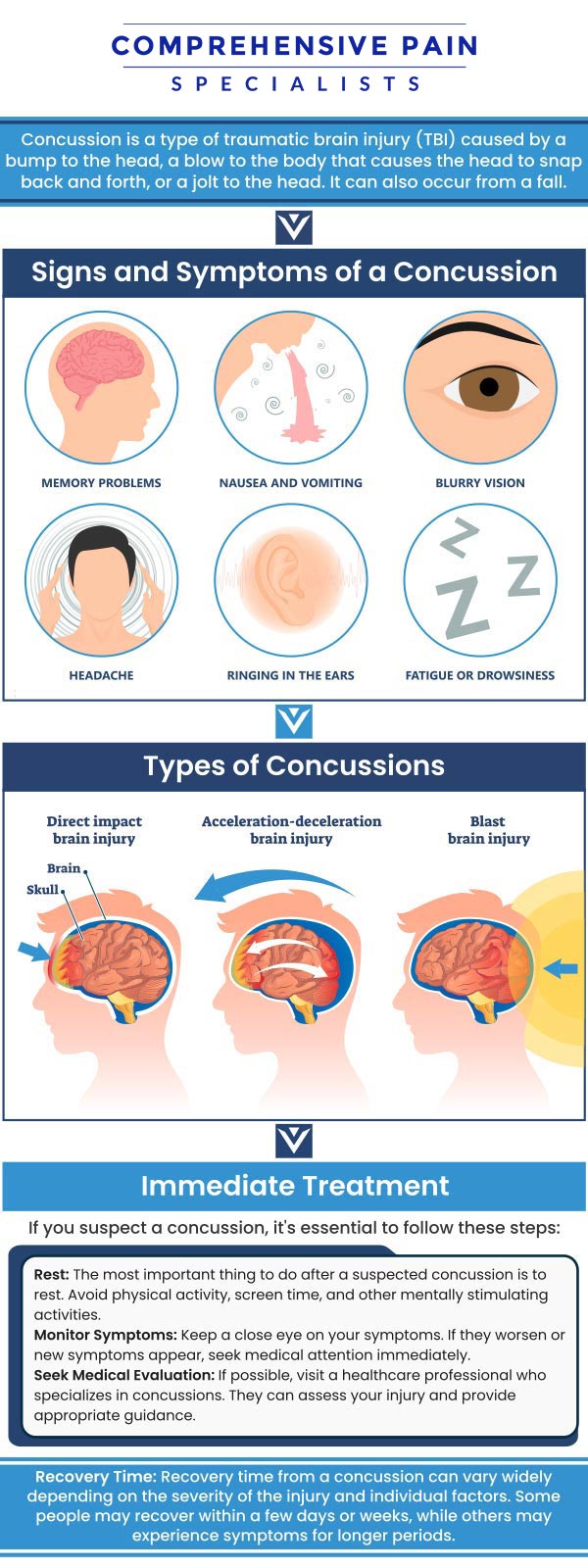
Table of Contents:
What is a concussion, and how does it occur?
What are the symptoms of a concussion?
How is a concussion diagnosed by healthcare providers?
How long does it take to recover from a concussion?
Personalized Concussion-Related Pain Management With Dr. Youssef Josephson, DO
A concussion is a type of mild traumatic brain injury (mTBI) that occurs when a sudden impact or force causes the brain to move rapidly inside the skull. This movement can affect normal brain function and lead to temporary changes in thinking, memory, balance, mood, and physical comfort.
Concussions can happen in several ways, including:
• Sports injuries: Collisions, falls, or impacts during contact sports and recreational activities.
• Motor vehicle accidents: Sudden acceleration, deceleration, or impact can cause the head and brain to move quickly.
• Falls: Slipping, tripping, or falling from a height can result in a head injury.
• Physical impacts: A direct blow to the head or a forceful impact to the body can cause a concussion.
Importantly, losing consciousness is not necessary for a concussion to occur. Some individuals remain awake but develop symptoms that affect their ability to think clearly, maintain balance, or perform regular activities.
Although most people improve with appropriate care, some experience lingering headaches, neck discomfort, and other pain-related symptoms. At Comprehensive Pain Specialists, Dr. Josephson focuses on evaluating persistent pain following head injuries and identifying whether underlying muscle, joint, or nerve-related issues may be contributing to discomfort.
Concussion symptoms can vary from person to person. Some appear immediately after an injury, while others may develop hours or even days later. Symptoms can affect physical comfort, cognitive function, emotional health, and sleep.
Common symptoms include:
• Headaches: Persistent or recurring head pain, sometimes accompanied by pressure or discomfort around the head.
• Dizziness and balance problems: Feeling lightheaded, unsteady, or having difficulty maintaining coordination.
• Neck pain: Stiffness, soreness, or discomfort that may occur alongside a head injury.
• Sensitivity to light and sound: Bright lights and loud noises may become uncomfortable.
• Memory and concentration difficulties: Trouble remembering information, focusing, or completing familiar tasks.
• Fatigue and sleep disturbances: Feeling unusually tired, sleeping more or less than usual, or having difficulty falling asleep.
• Mood changes: Irritability, anxiety, sadness, or increased emotional sensitivity.
• Nausea and vision changes: Feeling sick to your stomach, experiencing blurred vision, or having other visual disturbances.
Some people continue experiencing headaches, neck pain, and muscle spasms long after the initial injury. These symptoms may require further evaluation to determine their underlying cause.
At Comprehensive Pain Specialists, Dr. Josephson evaluates persistent concussion-related pain, including headaches and neck discomfort. Depending on the patient’s symptoms, treatment may involve targeted pain management approaches. The practice also offers Botox therapy for certain chronic pain conditions, including migraines and muscle-related discomfort. Whether this treatment is appropriate depends on an individual’s diagnosis and medical history.
When should you seek emergency care?
Certain symptoms following a head injury may indicate a serious brain injury rather than an uncomplicated concussion. Call 911 or visit the nearest emergency department if you experience a worsening headache that does not go away, repeated vomiting, seizures, slurred speech, weakness, numbness, increasing confusion, unequal pupil size, or difficulty waking up.
A suspected concussion should receive prompt medical evaluation, even when symptoms initially seem mild.
Diagnosing a concussion involves reviewing the circumstances surrounding the injury, evaluating symptoms, and performing an appropriate physical and neurological examination. Because concussion symptoms can overlap with other medical conditions, a careful evaluation is important.
Healthcare providers may assess several areas:
• Medical and Injury History
The evaluation typically begins with questions about how the injury occurred, when symptoms started, and whether there was any loss of consciousness. Previous concussions, existing medical conditions, and medications may also be relevant.
• Neurological Assessment
A neurological examination may assess alertness, memory, concentration, coordination, reflexes, balance, and other functions. These findings help providers identify possible changes following the injury.
• Cognitive and Symptom Evaluation
Providers may assess memory, attention, information processing, and problem-solving abilities. The patient’s reported symptoms are also important when determining how the injury affects everyday functioning.
• Imaging When Necessary
A CT scan or MRI is not routinely required to diagnose an uncomplicated concussion. However, a CT scan may be recommended when there are concerns about bleeding or other serious complications. The decision depends on the patient’s symptoms, examination findings, and risk factors.
At Comprehensive Pain Specialists, Dr. Youssef Josephson takes an individualized approach to evaluating persistent pain following head injuries. His pain management background includes advanced training in interventional pain medicine through Temple University Hospital. His evaluation focuses on identifying potential contributors to ongoing headaches, neck pain, and related discomfort.
For suspected acute brain injuries or emergency neurological symptoms, patients should first receive appropriate emergency or acute medical evaluation. Pain management is an important part of care for selected patients with persistent symptoms, but it does not replace initial concussion assessment.
Concussion recovery varies depending on the individual, the nature of the injury, age, medical history, and whether previous concussions have occurred. Most people with a mild concussion begin feeling better within a couple of weeks, although some may need several weeks or longer to recover.
During the initial recovery period, healthcare providers generally recommend a short period of relative rest, followed by a gradual return to regular activities as symptoms allow.
Helpful recovery measures may include:
• Getting adequate sleep and maintaining a consistent sleep schedule.
• Taking breaks when reading, working, or using electronic devices causes discomfort.
• Gradually returning to light physical activity as tolerated.
• Avoiding contact sports and activities that could cause another head injury until medically cleared.
• Following medical recommendations for returning to work, school, driving, and exercise.
• Attending recommended follow-up appointments to monitor symptoms.
Prolonged symptoms can include recurring headaches, dizziness, neck pain, sleep difficulties, and problems with memory or concentration. When symptoms continue beyond two to three weeks or worsen after returning to normal activities, further medical evaluation is recommended.
At Comprehensive Pain Specialists, Dr. Josephson focuses on patients experiencing persistent pain after concussions. Depending on the findings, treatment options may include targeted Botox therapy for appropriate migraine or muscle-related conditions and trigger point injections for selected cases of muscular pain. These treatments are not suitable for every patient and do not directly treat the underlying brain injury.
The goal is to identify treatable sources of discomfort and develop an appropriate plan that supports improved comfort and function.
Ongoing pain after a concussion can make everyday activities challenging. At Comprehensive Pain Specialists, Dr. Youssef Josephson, DO, combines his background in pain medicine and interventional procedures with an individualized approach to managing persistent post-injury discomfort.
His professional training includes a Doctor of Osteopathic Medicine degree from the University of Medicine and Dentistry of New Jersey School of Osteopathic Medicine, residency training in Physical Medicine and Rehabilitation, and an interventional pain medicine fellowship at Temple University Hospital.
For patients experiencing persistent headaches, neck pain, or muscle-related discomfort after a head injury, Dr. Josephson evaluates potential pain sources and discusses appropriate management options. The practice offers Botox therapy and trigger point injections among its pain management services, with treatment recommendations based on individual needs and clinical findings.
If you are experiencing ongoing concussion-related pain, consider scheduling an evaluation at Comprehensive Pain Specialists. Located at 1177 PA-315, Dolphin Plaza, Wilkes-Barre, PA 18702, the practice serves patients throughout Wilkes-Barre and surrounding communities.
Contact Comprehensive Pain Specialists to discuss your symptoms and learn whether an individualized pain management plan may help you move toward better daily functioning.
Medical references
The following authoritative sources support the medical information in the draft:
• CDC – About Mild TBI and Concussion: Explains concussion causes, diagnosis, testing, and medical evaluation.
CDC: About Mild TBI and Concussion
• CDC – Symptoms of Mild TBI and Concussion: Covers physical, cognitive, emotional, and sleep-related symptoms, including emergency warning signs.
CDC: Concussion Symptoms and Danger Signs
• CDC – What to Do After a Mild TBI or Concussion: Provides guidance on rest, gradual activity, and recovery.
CDC: Concussion Recovery Guidance
• CDC – Managing Return to Activities: Provides guidance on returning to work, school, driving, and sports after a concussion.
CDC: Managing Return to Activities
Check Out Our 5 Star Reviews


Additional Services You May Need
• Back Pain
• Neck Pain
• Joint Pain
• Shoulder Pain
• Hip Pain
• Knee Pain
• Arthritis
• Osteoarthritis
• Rheumatoid Arthritis
• Fibromyalgia
• Sciatica
• Complex Regional Pain Syndrome
• Neuropathic Pain
• Nerve Pain
• Diabetic Neuropathy
• Postherpetic Neuralgia
• Myofascial Pain Syndrome
• Headaches & Migraines
• Chronic Pain
• Failed Back Surgery
• Failed Neck Surgery
• Spinal Arthritis
• Aurora Zip
• Caudal Epidural Steroid Injection
• Cervical Epidural Steroid Injection
• Cervical Facet Radiofrequency Neurotomy
• Lumbar Radiofrequency Neurotomy
• Tenotomie
• Herniated Disc
• Bulging Disc
• Degenerative Disc Disease
• Spinal Stenosis
• Facet Joint Syndrome
• Pinched Nerve
• Spondylosis
• Spondyloisthesis
• Work-Related Injury
• Sports Injury
• Whipash
• Concussion
• Car Accident Injury
• Post-Surgical Pain
• Fracture-Related Pain
• Trigeminal Neuralgia
• Phantom Limb Pain
• Sacroiliac Joint Dysfunction
• Coccydynia
• Sacroiliac Joint Steroid Injection
• Vertiflex Superion Procedure
• Viadisc
• Head Injuries
• Muscle Spasm
• Lumbar Epidural Steroid Injection
• Medial Branch Block
• Sacroiliac Joint Fusions
• Rotator Cuff Tears
• Radiofrequency Ablation
• Migraine Botox

Additional Services You May Need
• Back Pain
• Neck Pain
• Joint Pain
• Shoulder Pain
• Hip Pain
• Knee Pain
• Arthritis
• Osteoarthritis
• Rheumatoid Arthritis
• Fibromyalgia
• Sciatica
• Complex Regional Pain Syndrome
• Neuropathic Pain
• Nerve Pain
• Diabetic Neuropathy
• Postherpetic Neuralgia
• Myofascial Pain Syndrome
• Headaches & Migraines
• Degenerative/Herniated Disc
• Bulging Disc
• Degenerative Disc Disease|
• Spinal Stenosis
• Facet Joint Syndrome
• Pinched Nerve
• Spondylosis
• Spondyloisthesis
• Work-Related Injury
• Sports Injury
• Whipash
• Concussion
• Car Accident Injury
• Post-Surgical Pain
• Fracture-Related Pain
• Trigeminal Neuralgia
• Phantom Limb Pain
• Sacroiliac Joint Dysfunction
• Coccydynia
• Chronic Pain
• Failed Back Surgery
• Failed Neck Surgery
• Spinal Arthritis
• Aurora Zip
• Caudal Epidural Steroid Injection
• Cervical Epidural Steroid Injection
• Cervical Facet Radiofrequency Neurotomy
• Lumbar Radiofrequency Neurotomy
• Tenotomie
• Sacroiliac Joint Steroid Injection
• Vertiflex Superion Procedure
• Viadisc
• Head Injuries
• Muscle Spasm
• Lumbar Epidural Steroid Injection
• Medial Branch Block
• Sacroiliac Joint Fusions
• Rotator Cuff Tears
• Radiofrequency Ablation
• Migraine Botox


 Send Text
 How May I Help You?