


How Can You Manage Degenerative Disc Disease Symptoms in Wilkes-Barre, PA?
Degenerative disc disease is a common spinal condition that can cause pain, stiffness, and weakness. With the right treatment plan, many patients can manage their symptoms and avoid long-term complications. Dr. Youssef Josephson, DO, and the team at Comprehensive Pain Specialists in Wilkes-Barre, PA, offer a range of diagnostic and treatment options to help you manage DDD. From pain medications to physical therapy and injections, we provide a comprehensive, personalized approach to spine care. For more information, contact us or book an appointment online. We are located at 1177 PA-315, Dolphin Plaza, Wilkes-Barre, PA 18702.
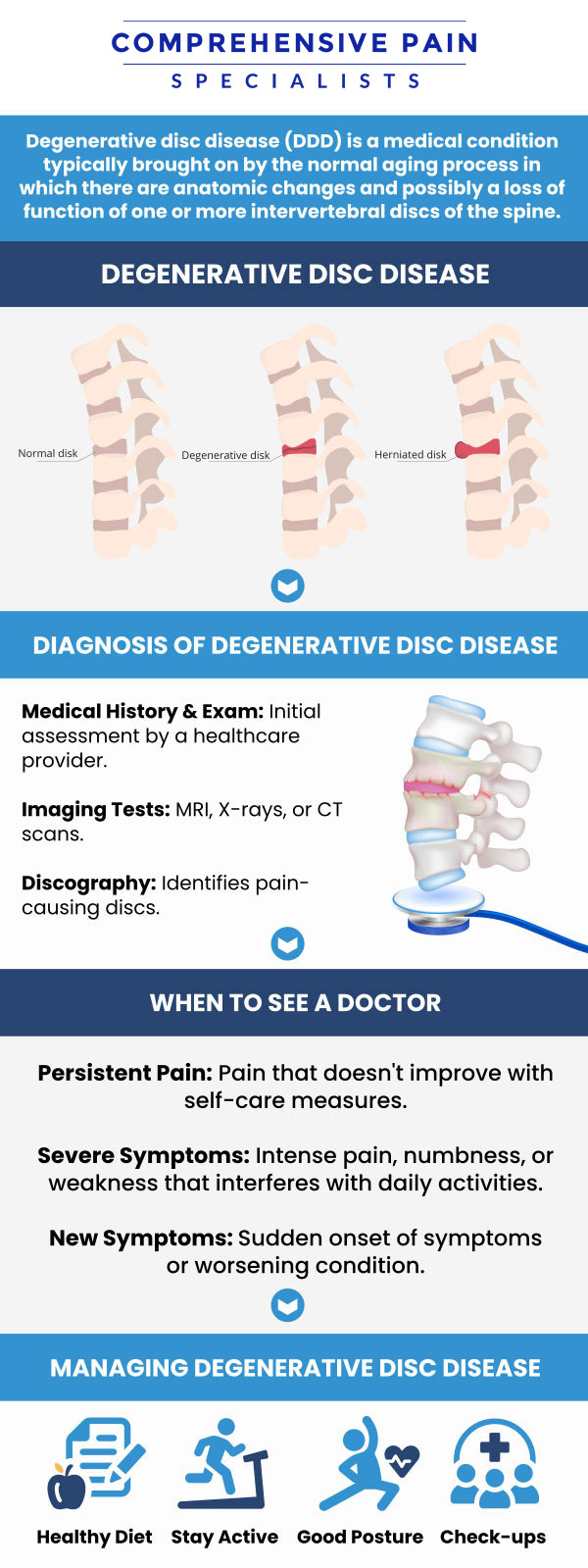
Table of Contents:
What is degenerative disc disease and how does it develop?
What are the symptoms of degenerative disc disease?
How is degenerative disc disease diagnosed?
How effective are pain medications in treating degenerative disc disease?
How Can Dr. Youssef Josephson, DO Help You Manage Degenerative Disc Disease?
Degenerative disc disease (DDD) is a condition that refers to the natural wear and tear of the intervertebral discs in the spine. These discs serve as shock absorbers between the vertebrae, helping to maintain the spine’s flexibility and stability. As we age, the discs lose water content, become less flexible, and may shrink, causing them to lose their ability to cushion the spine effectively. Over time, this degeneration can lead to disc bulging, herniation, or pressure on nearby nerves, causing pain and discomfort.
At Comprehensive Pain Specialists in Wilkes-Barre, PA, Dr. Youssef Josephson, DO, explains to patients that aging is the main factor contributing to the development of DDD. However, lifestyle factors like poor posture, smoking, and repetitive strain can speed up the process. A herniated or bulging disc can press on nerves, causing severe pain, numbness, and even muscle weakness. Early diagnosis and treatment are essential to managing DDD effectively and preventing further deterioration of the discs.
The symptoms of DDD can differ based on the location and extent of the disc degeneration. Some individuals may not experience symptoms, while others may have significant pain. Common symptoms include:
• Localized pain: Typically felt in the affected area of the spine, such as the lower back or neck.
• Radiating pain: Pain that spreads to other areas, such as down the leg (sciatica) or into the arms, if nerves are compressed.
• Numbness and tingling: Often caused by nerve compression, leading to sensations in the arms, legs, or feet.
• Muscle weakness: Pressure on nerves can result in muscle weakness, affecting mobility and strength.
• Limited range of motion: Stiffness in the spine, especially in the morning or after sitting for long periods, can reduce flexibility and movement.
Diagnosing DDD begins with a detailed medical history and physical exam. Dr. Youssef Josephson, DO, will ask about the nature of your symptoms, their duration, and any factors that may have contributed to your condition. A physical exam is performed to assess your spine’s flexibility, strength, and reflexes.
To confirm the diagnosis and rule out other conditions, diagnostic imaging is essential. The following diagnostic tests may be recommended:
• X-rays: These provide an overview of the spinal bones and any signs of disc degeneration, narrowing of the disc spaces, or arthritis.
• MRI (Magnetic Resonance Imaging): MRI scans offer detailed images of the discs and soft tissues, assisting in determining the degree of degeneration and nerve involvement.
• CT scans: If an MRI isn’t suitable, a CT scan can provide detailed cross-sectional images of the spine.
• Electromyography (EMG): In some cases, an EMG can be used to measure the electrical activity of muscles and nerves, helping to determine if nerve compression is present.
With this combination of diagnostic tools, Dr. Josephson can accurately diagnose DDD and create a treatment plan tailored to your specific needs.
Pain medications can help manage the symptoms of DDD, but they do not address the underlying cause of the condition. At Comprehensive Pain Specialists, Dr. Josephson emphasizes that pain medications should be part of a broader treatment plan, which includes physical therapy, lifestyle changes, and, if necessary, more advanced interventions.
For mild pain, over-the-counter medications like acetaminophen or nonsteroidal anti-inflammatory drugs (NSAIDs) such as ibuprofen can help alleviate inflammation and offer short-term relief. For moderate to severe pain, stronger prescription medications like muscle relaxants or opioids may be used, but these are typically prescribed cautiously due to their potential for dependency.
If medications aren’t sufficient, corticosteroid injections can be an effective option. These injections deliver powerful anti-inflammatory drugs directly to the affected area of the spine, helping to reduce pain and swelling around the degenerated disc.
While pain medications can provide relief, they do not stop the progression of DDD. For long-term relief, a multi-disciplinary approach, including physical therapy, exercises to strengthen the muscles around the spine, and possibly surgery in severe cases, is recommended.
At Comprehensive Pain Specialists in Wilkes-Barre, Dr. Youssef Josephson, D.O. (Dr. Joe) Specializes in treating the ongoing, aching pain associated with Degenerative Disc Disease (DDD). As spinal discs naturally lose their cushioning over time, they can cause chronic neck or back pain that often worsens with movement. Dr. Josephson’s approach is rooted in Physical Medicine and Rehabilitation, focusing on identifying the specific spinal levels causing distress and creating a plan to restore your structural integrity and quality of life.
Dr. Josephson offers a comprehensive suite of advanced, non-surgical treatments designed to alleviate DDD symptoms. This includes facet joint injections and medial branch blocks to target localized spinal joint pain, along with epidural steroid injections to reduce inflammation around irritated nerves. For long-term relief, he may recommend radiofrequency ablation (neurotomy) to interrupt pain signals or coordinate specialized physical therapy to strengthen the core muscles supporting the spine. By combining these interventional techniques with personalized lifestyle and ergonomic guidance, Dr. Josephson helps patients in the Wyoming Valley manage spinal aging and maintain an active, comfortable lifestyle.
If you are experiencing symptoms of degenerative disc disease, don’t wait—contact us today or schedule an appointment and begin your path to recovery. We are located at 1177 PA-315, Dolphin Plaza, Wilkes-Barre, PA 18702. We serve patients from Wilkes-Barre PA, Glen Lyon PA, Dallas PA, Pittston PA, Mountain Top PA, Plymouth PA, and surrounding areas.
Check Out Our 5 Star Reviews


Additional Services You May Need
• Back Pain
• Neck Pain
• Joint Pain
• Shoulder Pain
• Hip Pain
• Knee Pain
• Arthritis
• Osteoarthritis
• Rheumatoid Arthritis
• Fibromyalgia
• Sciatica
• Complex Regional Pain Syndrome
• Neuropathic Pain
• Nerve Pain
• Diabetic Neuropathy
• Postherpetic Neuralgia
• Myofascial Pain Syndrome
• Headaches & Migraines
• Chronic Pain
• Failed Back Surgery
• Failed Neck Surgery
• Spinal Arthritis
• Aurora Zip
• Caudal Epidural Steroid Injection
• Cervical Epidural Steroid Injection
• Cervical Facet Radiofrequency Neurotomy
• Lumbar Radiofrequency Neurotomy
• Tenotomie
• Herniated Disc
• Bulging Disc
• Degenerative Disc Disease
• Spinal Stenosis
• Facet Joint Syndrome
• Pinched Nerve
• Spondylosis
• Spondyloisthesis
• Work-Related Injury
• Sports Injury
• Whipash
• Concussion
• Car Accident Injury
• Post-Surgical Pain
• Fracture-Related Pain
• Trigeminal Neuralgia
• Phantom Limb Pain
• Sacroiliac Joint Dysfunction
• Coccydynia
• Sacroiliac Joint Steroid Injection
• Vertiflex Superion Procedure
• Viadisc
• Head Injuries
• Muscle Spasm
• Lumbar Epidural Steroid Injection
• Medial Branch Block
• Sacroiliac Joint Fusions
• Rotator Cuff Tears
• Radiofrequency Ablation
• Migraine Botox

Additional Services You May Need
• Back Pain
• Neck Pain
• Joint Pain
• Shoulder Pain
• Hip Pain
• Knee Pain
• Arthritis
• Osteoarthritis
• Rheumatoid Arthritis
• Fibromyalgia
• Sciatica
• Complex Regional Pain Syndrome
• Neuropathic Pain
• Nerve Pain
• Diabetic Neuropathy
• Postherpetic Neuralgia
• Myofascial Pain Syndrome
• Headaches & Migraines
• Degenerative/Herniated Disc
• Bulging Disc
• Degenerative Disc Disease|
• Spinal Stenosis
• Facet Joint Syndrome
• Pinched Nerve
• Spondylosis
• Spondyloisthesis
• Work-Related Injury
• Sports Injury
• Whipash
• Concussion
• Car Accident Injury
• Post-Surgical Pain
• Fracture-Related Pain
• Trigeminal Neuralgia
• Phantom Limb Pain
• Sacroiliac Joint Dysfunction
• Coccydynia
• Chronic Pain
• Failed Back Surgery
• Failed Neck Surgery
• Spinal Arthritis
• Aurora Zip
• Caudal Epidural Steroid Injection
• Cervical Epidural Steroid Injection
• Cervical Facet Radiofrequency Neurotomy
• Lumbar Radiofrequency Neurotomy
• Tenotomie
• Sacroiliac Joint Steroid Injection
• Vertiflex Superion Procedure
• Viadisc
• Head Injuries
• Muscle Spasm
• Lumbar Epidural Steroid Injection
• Medial Branch Block
• Sacroiliac Joint Fusions
• Rotator Cuff Tears
• Radiofrequency Ablation
• Migraine Botox


 Send Text
 How May I Help You?