


Symptoms of a Pinched Nerve: When to Seek Help
Identifying symptoms like numbness, sharp pain, or muscle weakness early is critical to preventing long-term nerve damage. Consult Dr. Youssef Josephson, DO, for evaluation and a targeted treatment plan designed to relieve pressure and restore proper function. Our dedicated team ensures timely intervention, helping you regain mobility and live without persistent discomfort. For more information, contact us or book an appointment online. We are located at 1177 PA-315, Dolphin Plaza, Wilkes-Barre, PA 18702.
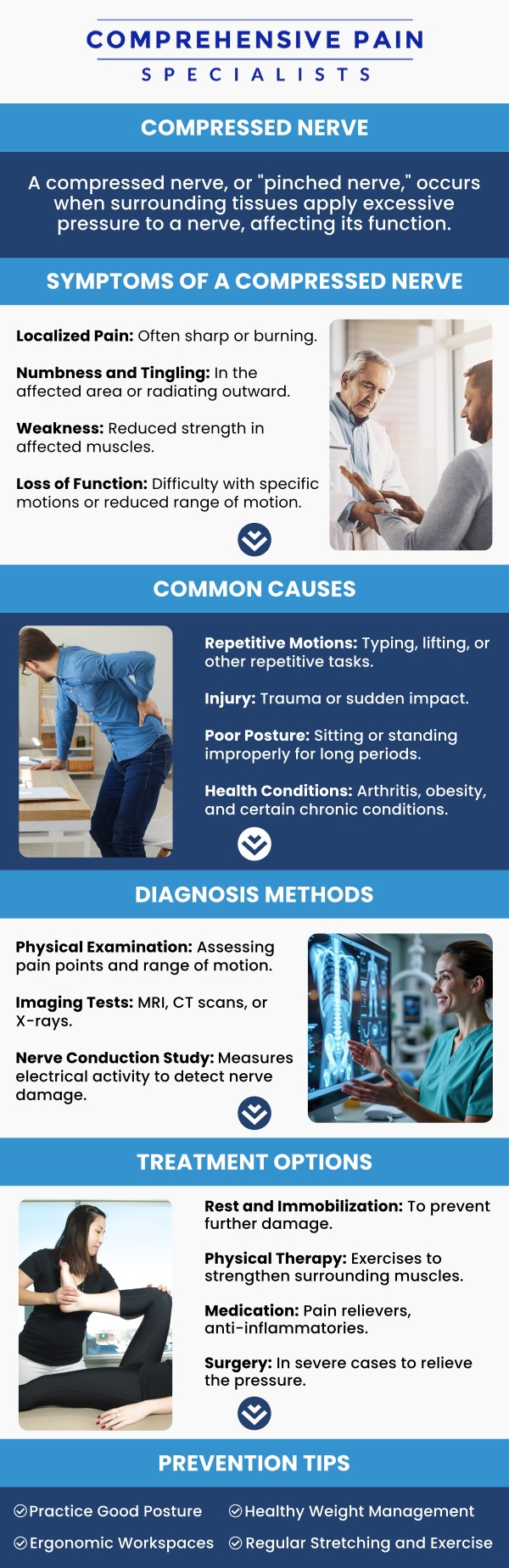
Table of Contents:
What symptoms of a pinched nerve indicate the need for immediate medical attention?
How long should you wait before seeking help for persistent pinched nerve symptoms?
Can a pinched nerve cause numbness or tingling, and when is it time to see a doctor?
How do symptoms of a pinched nerve differ between mild discomfort and a serious condition?
When to Seek Help for Pinched Nerve Symptoms: Professional Care by Dr. Youssef Josephson, DO at Comprehensive Pain Specialists
If you or a loved one experiences sudden weakness or numbness in an arm or leg—especially if it is severe or affects your ability to move—this may indicate serious nerve damage or another urgent medical issue. Similarly, the sudden loss of bladder or bowel control could signal nerve compression in the lower spine, known as cauda equina syndrome, which demands prompt medical intervention.
Severe or rapidly worsening pain, particularly when accompanied by these symptoms, should never be ignored. If nerve symptoms develop after a traumatic injury, or if they are associated with confusion, difficulty speaking, or changes in mental status, seek emergency care right away.
At Comprehensive Pain Specialists, our team is dedicated to providing thorough evaluations and advanced treatment options for nerve-related pain.
A pinched nerve occurs when surrounding tissues apply excessive pressure to a nerve, leading to symptoms such as pain, tingling, numbness, or weakness. While mild cases may resolve with rest, gentle movement, and avoiding aggravating activities, persistent or severe symptoms require specialized care.
If your symptoms do not begin to improve within a few days to a week, or if you experience significant weakness, worsening pain, or troubling symptoms, it is important to seek medical attention promptly.
Our practice offers comprehensive evaluation and a wide range of non-surgical and minimally invasive treatment options tailored to relieve your pain and restore function. Early intervention can prevent further nerve damage and improve your chances of a full recovery. If your symptoms interfere with your daily activities or persist longer than one to two weeks, contact Comprehensive Pain Specialists to schedule a thorough assessment and personalized treatment plan.
A pinched nerve occurs when surrounding tissues—such as muscles, bones, or cartilage—put excess pressure on a nerve. This pressure can disrupt the nerve’s normal function, leading to symptoms like numbness, tingling, or that familiar “pins and needles” sensation. Depending on which nerve is affected, these symptoms may appear in your neck, arm, lower back, or leg.
At Comprehensive Pain Specialists, we often see patients experiencing numbness and tingling, which are common signs of a pinched nerve. Other symptoms can include muscle weakness, sharp or burning pain, and the sensation that a hand or foot has “fallen asleep.” While mild symptoms may improve with rest, ice or heat therapy, and gentle stretching, persistent or worsening symptoms shouldn’t be ignored.
If you notice that numbness or tingling lasts for several days, worsens over time, or is accompanied by significant weakness, it’s important to seek medical attention. Additionally, symptoms such as loss of bladder or bowel control, or sudden, severe pain affecting your mobility or daily function, require prompt evaluation.
Pinched nerve can cause a wide range of symptoms, and recognizing the severity of these symptoms is crucial for effective treatment and relief.
For many patients, a pinched nerve may first present with mild discomfort—such as occasional tingling, numbness, or a “pins and needles” sensation in the affected area. You might also experience mild, intermittent pain or slight weakness that does not disrupt your daily activities. Often, these mild symptoms can be managed with rest, gentle stretching, or posture adjustments, and may resolve on their own.
However, when a pinched nerve becomes more serious, the symptoms tend to be persistent or worsening. You may notice sharp, burning, or radiating pain that travels from the neck or back into the arms or legs. Numbness and muscle weakness can intensify, making it difficult to perform everyday tasks like gripping objects or walking. In severe cases, you might experience muscle wasting, significant loss of sensation, or even issues with bladder or bowel control—all of which are signs of nerve damage that require immediate medical attention.
If you are experiencing symptoms of a pinched nerve—such as persistent numbness, tingling, burning sensations, muscle weakness, or sharp pain that does not improve with rest and self-care—it may be time to seek expert help. At Comprehensive Pain Specialists, our team, led by Dr. Youssef Josephson, DO, understands that early evaluation is key to preventing further nerve damage and helping you achieve relief as quickly as possible.
You should consider scheduling an appointment at Comprehensive Pain Specialists if your symptoms are worsening, interfering with your daily activities, or spreading to other parts of your body.
In some cases, pinched nerve symptoms can be accompanied by more serious signs, including loss of bladder or bowel control, severe weakness, or sudden, intense pain. These symptoms require immediate medical attention. The team are fully equipped to provide a thorough assessment and swift intervention to address urgent concerns and prevent complications. For more information, contact us or book an appointment online. We are located at 1177 PA-315, Dolphin Plaza, Wilkes-Barre, PA 18702. We serve patients from Wilkes-Barre PA, Glen Lyon PA, Dallas PA, Pittston PA, Mountain Top PA, Plymouth PA, and surrounding areas.
Check Out Our 5 Star Reviews


Additional Services You May Need
• Back Pain
• Neck Pain
• Joint Pain
• Shoulder Pain
• Hip Pain
• Knee Pain
• Arthritis
• Osteoarthritis
• Rheumatoid Arthritis
• Fibromyalgia
• Sciatica
• Complex Regional Pain Syndrome
• Neuropathic Pain
• Nerve Pain
• Diabetic Neuropathy
• Postherpetic Neuralgia
• Myofascial Pain Syndrome
• Headaches & Migraines
• Chronic Pain
• Failed Back Surgery
• Failed Neck Surgery
• Spinal Arthritis
• Aurora Zip
• Caudal Epidural Steroid Injection
• Cervical Epidural Steroid Injection
• Cervical Facet Radiofrequency Neurotomy
• Lumbar Radiofrequency Neurotomy
• Tenotomie
• Herniated Disc
• Bulging Disc
• Degenerative Disc Disease
• Spinal Stenosis
• Facet Joint Syndrome
• Pinched Nerve
• Spondylosis
• Spondyloisthesis
• Work-Related Injury
• Sports Injury
• Whipash
• Concussion
• Car Accident Injury
• Post-Surgical Pain
• Fracture-Related Pain
• Trigeminal Neuralgia
• Phantom Limb Pain
• Sacroiliac Joint Dysfunction
• Coccydynia
• Sacroiliac Joint Steroid Injection
• Vertiflex Superion Procedure
• Viadisc
• Head Injuries
• Muscle Spasm
• Lumbar Epidural Steroid Injection
• Medial Branch Block
• Sacroiliac Joint Fusions
• Rotator Cuff Tears
• Radiofrequency Ablation
• Migraine Botox

Additional Services You May Need
• Back Pain
• Neck Pain
• Joint Pain
• Shoulder Pain
• Hip Pain
• Knee Pain
• Arthritis
• Osteoarthritis
• Rheumatoid Arthritis
• Fibromyalgia
• Sciatica
• Complex Regional Pain Syndrome
• Neuropathic Pain
• Nerve Pain
• Diabetic Neuropathy
• Postherpetic Neuralgia
• Myofascial Pain Syndrome
• Headaches & Migraines
• Degenerative/Herniated Disc
• Bulging Disc
• Degenerative Disc Disease|
• Spinal Stenosis
• Facet Joint Syndrome
• Pinched Nerve
• Spondylosis
• Spondyloisthesis
• Work-Related Injury
• Sports Injury
• Whipash
• Concussion
• Car Accident Injury
• Post-Surgical Pain
• Fracture-Related Pain
• Trigeminal Neuralgia
• Phantom Limb Pain
• Sacroiliac Joint Dysfunction
• Coccydynia
• Chronic Pain
• Failed Back Surgery
• Failed Neck Surgery
• Spinal Arthritis
• Aurora Zip
• Caudal Epidural Steroid Injection
• Cervical Epidural Steroid Injection
• Cervical Facet Radiofrequency Neurotomy
• Lumbar Radiofrequency Neurotomy
• Tenotomie
• Sacroiliac Joint Steroid Injection
• Vertiflex Superion Procedure
• Viadisc
• Head Injuries
• Muscle Spasm
• Lumbar Epidural Steroid Injection
• Medial Branch Block
• Sacroiliac Joint Fusions
• Rotator Cuff Tears
• Radiofrequency Ablation
• Migraine Botox


 Send Text
 How May I Help You?