


How to Manage a Pinched Nerve: Tips for Relief and Prevention
Managing a pinched nerve combines immediate relief techniques with long-term prevention strategies to stop pain from returning. Visit Dr. Youssef Josephson, DO, for a comprehensive evaluation and a customized treatment plan tailored to your specific condition. Our skilled team helps you regain full mobility and live a pain-free life through proven medical interventions. For more information, contact us or book an appointment online. We are located at 1177 PA-315, Dolphin Plaza, Wilkes-Barre, PA 18702.
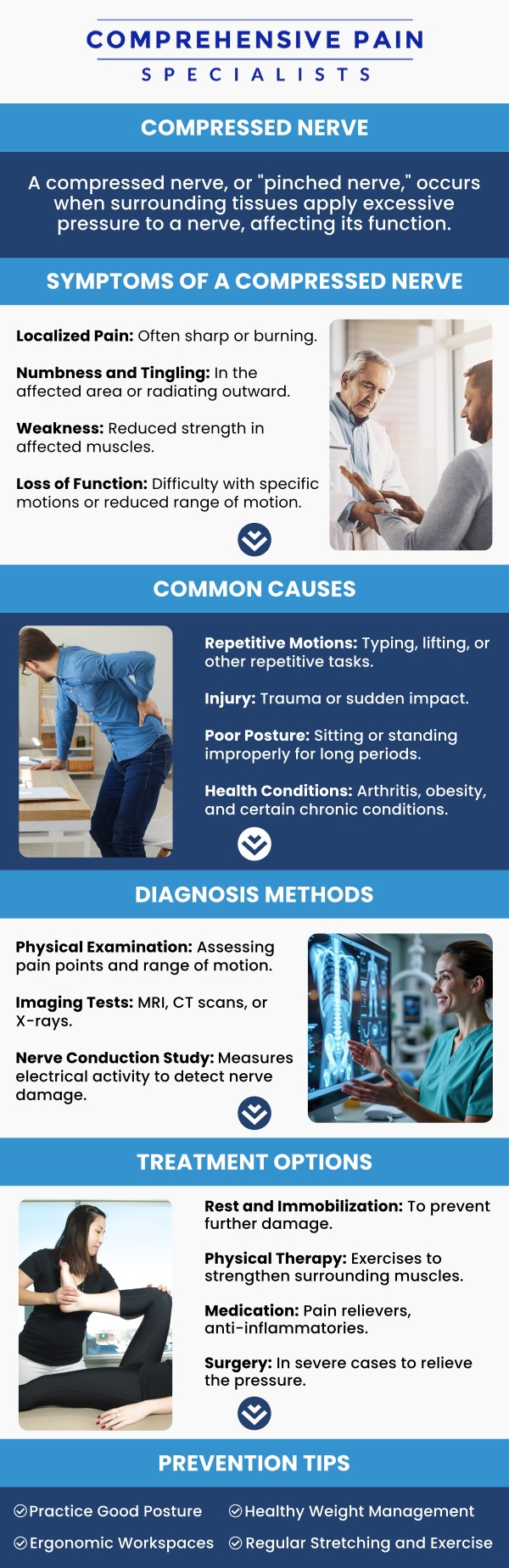
Table of Contents:
How do I know if my pain is caused by a pinched nerve versus a simple muscle strain?
Should I stay active or remain on bed rest while recovering from a pinched nerve?
If conservative tips don’t work, what minimally invasive procedures can provide relief?
What lifestyle changes can I make to prevent a pinched nerve from recurring in the future?
Pinched Nerve Management: Tips for Relief and Long-Term Prevention with Dr. Youssef Josephson, DO at Comprehensive Pain Specialists
Distinguishing between pain caused by a pinched nerve and a simple muscle strain can be challenging. However, identifying the source of your discomfort is crucial for effective treatment and lasting relief.
Pinched Nerve Pain:
Pain from a pinched nerve often feels sharp, burning, or shooting, and may radiate from the neck or back down into the arm or leg, following the path of the affected nerve. You may also notice numbness, tingling, or a “pins and needles” sensation, and sometimes even muscle weakness in the affected area. This type of pain frequently worsens with certain movements, such as turning your head or sitting, and may not improve significantly with rest.
Muscle Strain Pain:
In contrast, a muscle strain typically produces a more localized, aching, or throbbing pain centered around the injured muscle—often following physical activity or after lifting something heavy. You might experience muscle stiffness, swelling, or spasms, but generally not numbness or tingling. Muscle strain pain usually responds well to rest, gentle stretching, and over-the-counter pain medications.
If you’re recovering from a pinched nerve, you may be unsure whether to remain on bed rest or try to stay active. At Comprehensive Pain Specialists, our team understands that finding the right balance is crucial for your recovery. Medical research and our clinical experience both show that prolonged bed rest can actually slow your healing, weaken supporting muscles, and increase stiffness. Instead, we typically recommend gentle movement and light physical activity, as long as these do not worsen your symptoms.
Examples of safe activities may include short walks, gentle stretching, or specific exercises that we prescribe as part of your individualized treatment plan. It’s important to avoid any actions that increase your pain or put additional stress on the affected nerve. Every patient’s situation is different, so our pain specialists will tailor recommendations to your specific needs, considering the location and cause of your pinched nerve as well as your overall health.
If conservative treatments—such as rest, physical therapy, medications, or lifestyle changes—have not provided sufficient relief, our team offers a variety of minimally invasive procedures designed to target your pain at its source.
These advanced treatments are typically performed on an outpatient basis, minimizing risk, discomfort, and recovery time compared to traditional surgery. For patients suffering from joint or back pain, we may recommend corticosteroid injections to reduce inflammation directly at the affected area. For those with knee osteoarthritis, hyaluronic acid injections are available to enhance joint lubrication and improve movement.
If your pain is nerve-related, options like nerve blocks or radiofrequency ablation can help interrupt pain signals and provide significant, lasting relief. Our specialists also perform minimally invasive arthroscopy to diagnose and treat joint problems through tiny incisions, as well as spinal procedures—such as epidural steroid injections or minimally invasive discectomy.
The most appropriate procedure for you will depend on your specific diagnosis, health history, and prior response to other treatments. Our experienced providers will work closely with you to discuss all available options and develop a personalized treatment plan tailored to your needs.
Making simple lifestyle adjustments can play an important role in reducing the risk of a pinched nerve returning and supporting long-term nerve health.
Maintain a Healthy Weight
Carrying excess weight can place added stress on the spine and surrounding nerves. At Comprehensive Pain Specialists, our team can offer guidance on weight management strategies that support spinal health and help reduce nerve pressure.
Stay Active with the Right Exercises
Regular, low-impact exercise helps strengthen muscles and improve flexibility. Activities such as walking, swimming, and yoga are often recommended to support posture and core strength. Our staff can help create an exercise plan tailored to your abilities and goals.
Optimize Your Posture
Maintaining proper posture reduces unnecessary nerve compression. Whether sitting or standing for long periods, our specialists can provide guidance on body mechanics and ergonomic adjustments, including workstation setup and supportive seating.
Modify Repetitive Activities
Repeated motions at work or during hobbies can irritate nerves over time. Identifying these patterns and incorporating breaks, stretching, and technique changes can help protect vulnerable areas such as the wrists, shoulders, and neck.
Manage Stress Effectively
Ongoing stress can lead to muscle tension that contributes to nerve irritation. Techniques such as deep breathing, mindfulness, and gentle stretching may help promote relaxation and nerve health.
Lifestyle Choices Matter
Avoiding smoking, staying hydrated, and following a balanced diet support healthy nerve function. Managing chronic conditions like diabetes or arthritis can also reduce the risk of recurring nerve issues.
A pinched nerve can cause pain, tingling, numbness, or weakness that interferes with daily life. At Comprehensive Pain Specialists, Dr. Youssef Josephson, DO, and our team focus on relieving symptoms while helping prevent future flare-ups through a structured, evidence-based approach.
Immediate Relief: Expert Evaluation and Targeted Care
Relieving discomfort quickly and safely is the first priority. Dr. Josephson performs a detailed evaluation to identify the cause of nerve compression and tailor care to your needs. Treatment plans may include rest and activity modification, guidance on cold or heat therapy, medication management when appropriate, and referrals to physical therapy for targeted stretching and strengthening. Patients also receive ergonomic and postural coaching to reduce strain during everyday activities.
Long-Term Prevention: Comprehensive, Individualized Strategies
Preventing recurrence is a key part of care. Dr. Josephson helps patients develop long-term strategies such as personalized exercise plans to improve core strength and flexibility, weight and health management support, and lifestyle or workplace adjustments to reduce nerve stress. Regular follow-ups allow early detection of recurring symptoms and proactive treatment.
Advanced Solutions When Needed
When conservative care isn’t enough, minimally invasive options such as targeted injections may be considered. These treatments are selected carefully to support comfort, safety, and long-term improvement.
Why Choose Comprehensive Pain Specialists?
• Board-Certified Expertise: Dr. Josephson’s extensive training in pain management ensures you receive the highest standard of care.
• Patient-Centered Philosophy: We listen to your concerns, answer your questions, and involve you in every decision.
• Cutting-Edge Solutions: Our practice stays current with the latest research and techniques in nerve pain management.
If you’re experiencing symptoms of a pinched nerve, don’t wait—early intervention is key to preventing permanent nerve damage. Schedule a consultation with Dr. Youssef Josephson, DO, at Comprehensive Pain Specialists today, and start your journey toward lasting relief and improved quality of life. For more information, contact us. We are located at 1177 PA-315, Dolphin Plaza, Wilkes-Barre, PA 18702. We serve patients from Wilkes-Barre PA, Glen Lyon PA, Dallas PA, Pittston PA, Mountain Top PA, Plymouth PA, and surrounding areas.
Check Out Our 5 Star Reviews


Additional Services You May Need
• Back Pain
• Neck Pain
• Joint Pain
• Shoulder Pain
• Hip Pain
• Knee Pain
• Arthritis
• Osteoarthritis
• Rheumatoid Arthritis
• Fibromyalgia
• Sciatica
• Complex Regional Pain Syndrome
• Neuropathic Pain
• Nerve Pain
• Diabetic Neuropathy
• Postherpetic Neuralgia
• Myofascial Pain Syndrome
• Headaches & Migraines
• Chronic Pain
• Failed Back Surgery
• Failed Neck Surgery
• Spinal Arthritis
• Aurora Zip
• Caudal Epidural Steroid Injection
• Cervical Epidural Steroid Injection
• Cervical Facet Radiofrequency Neurotomy
• Lumbar Radiofrequency Neurotomy
• Tenotomie
• Herniated Disc
• Bulging Disc
• Degenerative Disc Disease
• Spinal Stenosis
• Facet Joint Syndrome
• Pinched Nerve
• Spondylosis
• Spondyloisthesis
• Work-Related Injury
• Sports Injury
• Whipash
• Concussion
• Car Accident Injury
• Post-Surgical Pain
• Fracture-Related Pain
• Trigeminal Neuralgia
• Phantom Limb Pain
• Sacroiliac Joint Dysfunction
• Coccydynia
• Sacroiliac Joint Steroid Injection
• Vertiflex Superion Procedure
• Viadisc
• Head Injuries
• Muscle Spasm
• Lumbar Epidural Steroid Injection
• Medial Branch Block
• Sacroiliac Joint Fusions
• Rotator Cuff Tears
• Radiofrequency Ablation
• Migraine Botox

Additional Services You May Need
• Back Pain
• Neck Pain
• Joint Pain
• Shoulder Pain
• Hip Pain
• Knee Pain
• Arthritis
• Osteoarthritis
• Rheumatoid Arthritis
• Fibromyalgia
• Sciatica
• Complex Regional Pain Syndrome
• Neuropathic Pain
• Nerve Pain
• Diabetic Neuropathy
• Postherpetic Neuralgia
• Myofascial Pain Syndrome
• Headaches & Migraines
• Degenerative/Herniated Disc
• Bulging Disc
• Degenerative Disc Disease|
• Spinal Stenosis
• Facet Joint Syndrome
• Pinched Nerve
• Spondylosis
• Spondyloisthesis
• Work-Related Injury
• Sports Injury
• Whipash
• Concussion
• Car Accident Injury
• Post-Surgical Pain
• Fracture-Related Pain
• Trigeminal Neuralgia
• Phantom Limb Pain
• Sacroiliac Joint Dysfunction
• Coccydynia
• Chronic Pain
• Failed Back Surgery
• Failed Neck Surgery
• Spinal Arthritis
• Aurora Zip
• Caudal Epidural Steroid Injection
• Cervical Epidural Steroid Injection
• Cervical Facet Radiofrequency Neurotomy
• Lumbar Radiofrequency Neurotomy
• Tenotomie
• Sacroiliac Joint Steroid Injection
• Vertiflex Superion Procedure
• Viadisc
• Head Injuries
• Muscle Spasm
• Lumbar Epidural Steroid Injection
• Medial Branch Block
• Sacroiliac Joint Fusions
• Rotator Cuff Tears
• Radiofrequency Ablation
• Migraine Botox


 Send Text
 How May I Help You?