


Failed MILD Procedure: Understanding Your Next Treatment Options for Pain Relief
If a minimally invasive lumbar decompression (MILD) procedure fails to deliver sufficient relief, secondary interventions such as spinal cord stimulation, epidural injections, or targeted nerve therapies can effectively address remaining pain generators. To identify the root cause of persistent symptoms and build a personalized plan for lasting relief, consult Dr. Youssef Josephson, D.O. at Comprehensive Pain Specialists. For more information, contact us or book an appointment online. We are located at 1177 PA-315, Dolphin Plaza, Wilkes-Barre, PA 18702.
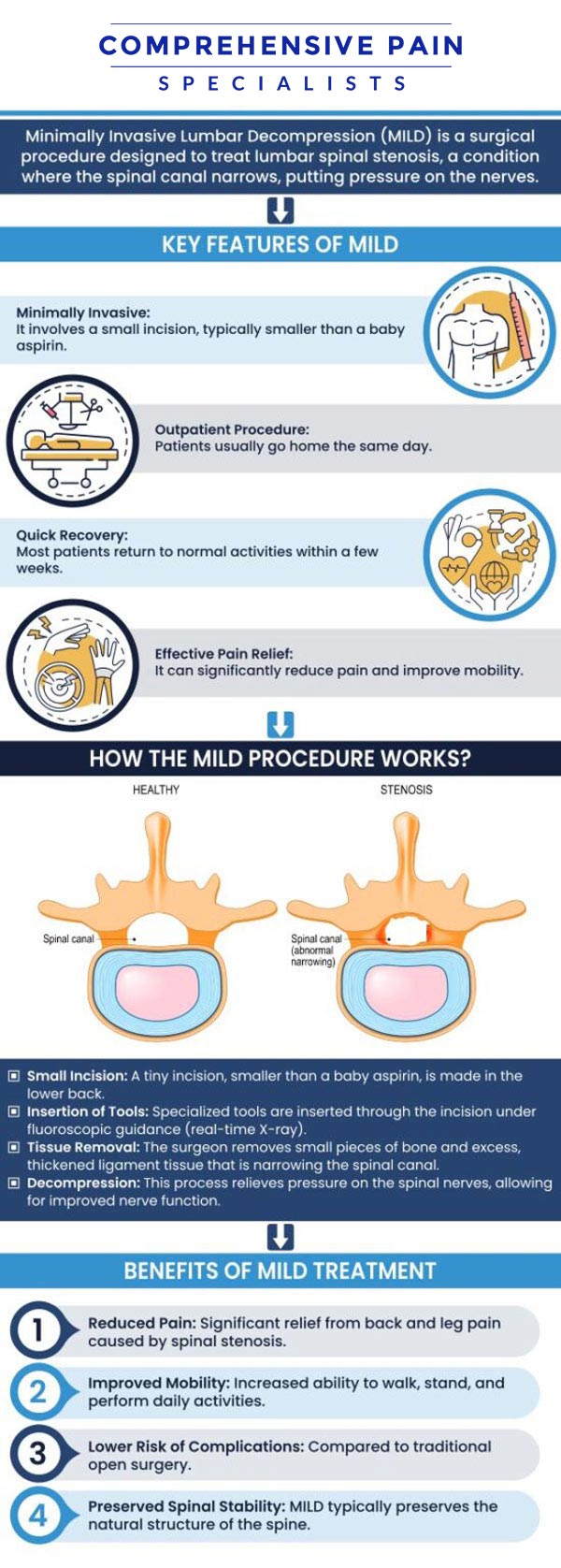
Table of Contents:
Why does a MILD procedure sometimes fail to provide the expected pain relief?
What are the common signs that a MILD procedure may not have been successful?
What treatment options are available after a failed MILD procedure?
How can a pain specialist evaluate the reasons behind a failed MILD procedure?
Why choose Dr. Youssef Josephson, D.O. at Comprehensive Pain Specialists for evaluation and care after a failed MILD procedure?
MILD procedure (Minimally Invasive Lumbar Decompression) is designed to relieve pain caused by lumbar spinal stenosis by removing small portions of bone and thickened ligament, increasing space for the spinal nerves and reducing nerve compression.
However, it’s important for patients to understand that while the MILD procedure can be highly effective for many, some individuals may not experience the expected level of pain relief. There are several reasons this may occur:
• Multiple Causes of Spinal Stenosis: Lumbar stenosis can result from several factors, including herniated discs, facet joint changes, or spinal instability—not just thickened ligamentum flavum. The MILD procedure primarily addresses stenosis due to ligament thickening, so if your pain is caused by other structures, you may require additional or alternative treatments.
• Advanced Degenerative Changes: Patients with severe arthritis, multi-level stenosis, or rapidly progressing spinal degeneration may have more complex pain generators, which can limit the effectiveness or duration of relief from a single procedure.
• Technical Limitations: In some cases, anatomical variations or incomplete removal of compressive tissue during the procedure can result in ongoing nerve compression and persistent pain.
• Accurate Diagnosis is Key: Precise diagnosis is essential for successful outcomes. Sometimes, pain may originate from sources outside the lumbar spine, such as the hip or peripheral nerves, meaning that treating lumbar stenosis alone may not resolve your symptoms.
• Individual Variation: Every patient’s healing response, pain perception, and underlying health conditions are different, which can influence the degree of pain relief experienced after the procedure.
The primary goal of the MILD procedure is to relieve symptoms of lumbar spinal stenosis, such as neurogenic claudication—pain, numbness, or tingling in the lower back, buttocks, or legs when walking or standing. If you notice that these symptoms persist or your ability to stand or walk has not improved, it may indicate that the procedure was not fully effective. Continued discomfort, weakness in your legs, or unchanged mobility are also important to report.
Another sign to watch for is the return of your original symptoms after a brief period of relief. If pain, numbness, or difficulty moving returns soon after your procedure, or if you find yourself needing the same or higher doses of pain medications, please let us know. If your day-to-day activities remain as limited as before, this could signal that further evaluation is needed.
Rarely, new symptoms may arise, such as increased back pain, changes in bladder or bowel control, or worsening numbness. These symptoms could indicate complications and require prompt attention from our specialists.
If a MILD (Minimally Invasive Lumbar Decompression) procedure does not provide sufficient relief for your lumbar spinal stenosis symptoms, Comprehensive Pain Specialists offers a range of advanced treatment options tailored to your unique needs.
Our team begins by reassessing your condition and optimizing non-surgical management strategies. These may include advanced pain management techniques such as medications or image-guided epidural steroid injections, and education on activity modifications to help minimize symptom flare-ups.
Should conservative measures prove inadequate, our specialists can discuss additional minimally invasive procedures. These may involve the placement of interspinous spacers—small devices inserted between the vertebrae to relieve nerve compression—or other targeted decompression techniques, all performed with precision and patient comfort in mind.
For those whose symptoms significantly impair daily function or cause persistent pain, Comprehensive Pain Specialists will evaluate the potential benefits of surgical interventions
Every decision is made collaboratively. We take into account your medical history, overall health, and personal preferences to determine the safest and most effective next steps. Our goal is to provide compassionate, individualized care that restores your function and quality of life.
At Comprehensive Pain Specialists, our team takes a thorough and individualized approach when evaluating patients who have experienced persistent symptoms following a Minimally Invasive Lumbar Decompression (MILD) procedure. Our pain specialists utilize a comprehensive and systematic process to identify the underlying reasons for a failed procedure and to develop an appropriate, personalized treatment plan.
Comprehensive Assessment:
We begin with an in-depth review of your medical history, focusing on the original diagnosis and the specific indications for your MILD procedure. Our specialists evaluate prior imaging studies and the clinical rationale for the initial intervention, ensuring that the diagnosis of lumbar spinal stenosis and patient selection were accurate.
Detailed Physical Examination:
During your visit, our physicians perform a meticulous physical examination to assess neurological function, compare current symptoms to your pre-procedure state, and identify any new or evolving pain generators. We pay close attention to the specific nature, location, and severity of your pain, as well as any changes since the procedure.
Advanced Diagnostic Tools:
At Comprehensive Pain Specialists, we utilize the latest imaging technologies to evaluate the current status of your lumbar spine. These studies help us identify persistent or recurrent ligamentum flavum hypertrophy, inadequate decompression, new or residual nerve compression, and other structural changes such as disc herniation or facet joint arthropathy. If you have a history of spine surgery, we also assess for potential hardware-related issues.
Targeted Diagnostic Injections:
When necessary, we employ diagnostic injections—such as epidural steroid injections or selective nerve root blocks—to precisely localize the source of your pain. These techniques help differentiate between pain from the original area of stenosis and pain arising from other structures.
Personalized Care Plan:
Through this comprehensive, multifaceted evaluation, the specialists at Comprehensive Pain Specialists are able to determine the underlying causes behind a failed MILD procedure. We work with you to develop a tailored management plan that may include advanced interventions, medication management, or minimally invasive procedures—always with a focus on improving your quality of life and functionality.
At Comprehensive Pain Specialists, patients experiencing persistent symptoms after a failed Minimally Invasive Lumbar Decompression (MILD) procedure receive the highest standard of care from a team dedicated to advanced pain management. Dr. Youssef Josephson, D.O., pain management physician with extensive experience in treating complex spinal conditions and failed back procedures.
Dr. Josephson and the team at Comprehensive Pain Specialists are committed to a thorough and individualized approach. Every patient is carefully evaluated using advanced diagnostic tools to determine the underlying causes of ongoing pain and to understand why previous treatments may not have been effective. This comprehensive assessment includes a detailed review of spinal pathology, prior interventions, and the patient’s overall health status.
Choosing Comprehensive Pain Specialists means partnering with a practice that prioritizes function restoration and quality of life. With Dr. Josephson’s expertise and our team’s supportive, patient-focused care, individuals struggling after a failed MILD procedure can trust us to deliver effective, compassionate solutions. For more information, contact us or book an appointment online. We are located at 1177 PA-315, Dolphin Plaza, Wilkes-Barre, PA 18702. We serve patients from Wilkes-Barre PA, Glen Lyon PA, Dallas PA, Pittston PA, Mountain Top PA, Plymouth PA, and surrounding areas.
Check Out Our 5 Star Reviews


Additional Services You May Need
• Back Pain
• Neck Pain
• Joint Pain
• Shoulder Pain
• Hip Pain
• Knee Pain
• Arthritis
• Osteoarthritis
• Rheumatoid Arthritis
• Fibromyalgia
• Sciatica
• Complex Regional Pain Syndrome
• Neuropathic Pain
• Nerve Pain
• Diabetic Neuropathy
• Postherpetic Neuralgia
• Myofascial Pain Syndrome
• Headaches & Migraines
• Chronic Pain
• Failed Back Surgery
• Failed Neck Surgery
• Spinal Arthritis
• Aurora Zip
• Caudal Epidural Steroid Injection
• Cervical Epidural Steroid Injection
• Cervical Facet Radiofrequency Neurotomy
• Lumbar Radiofrequency Neurotomy
• Tenotomie
• Herniated Disc
• Bulging Disc
• Degenerative Disc Disease
• Spinal Stenosis
• Facet Joint Syndrome
• Pinched Nerve
• Spondylosis
• Spondyloisthesis
• Work-Related Injury
• Sports Injury
• Whipash
• Concussion
• Car Accident Injury
• Post-Surgical Pain
• Fracture-Related Pain
• Trigeminal Neuralgia
• Phantom Limb Pain
• Sacroiliac Joint Dysfunction
• Coccydynia
• Sacroiliac Joint Steroid Injection
• Vertiflex Superion Procedure
• Viadisc
• Head Injuries
• Muscle Spasm
• Lumbar Epidural Steroid Injection
• Medial Branch Block
• Sacroiliac Joint Fusions
• Rotator Cuff Tears
• Radiofrequency Ablation
• Migraine Botox

Additional Services You May Need
• Back Pain
• Neck Pain
• Joint Pain
• Shoulder Pain
• Hip Pain
• Knee Pain
• Arthritis
• Osteoarthritis
• Rheumatoid Arthritis
• Fibromyalgia
• Sciatica
• Complex Regional Pain Syndrome
• Neuropathic Pain
• Nerve Pain
• Diabetic Neuropathy
• Postherpetic Neuralgia
• Myofascial Pain Syndrome
• Headaches & Migraines
• Degenerative/Herniated Disc
• Bulging Disc
• Degenerative Disc Disease|
• Spinal Stenosis
• Facet Joint Syndrome
• Pinched Nerve
• Spondylosis
• Spondyloisthesis
• Work-Related Injury
• Sports Injury
• Whipash
• Concussion
• Car Accident Injury
• Post-Surgical Pain
• Fracture-Related Pain
• Trigeminal Neuralgia
• Phantom Limb Pain
• Sacroiliac Joint Dysfunction
• Coccydynia
• Chronic Pain
• Failed Back Surgery
• Failed Neck Surgery
• Spinal Arthritis
• Aurora Zip
• Caudal Epidural Steroid Injection
• Cervical Epidural Steroid Injection
• Cervical Facet Radiofrequency Neurotomy
• Lumbar Radiofrequency Neurotomy
• Tenotomie
• Sacroiliac Joint Steroid Injection
• Vertiflex Superion Procedure
• Viadisc
• Head Injuries
• Muscle Spasm
• Lumbar Epidural Steroid Injection
• Medial Branch Block
• Sacroiliac Joint Fusions
• Rotator Cuff Tears
• Radiofrequency Ablation
• Migraine Botox


 Send Text
 How May I Help You?