


How Long Does Pinched Nerve Treatment Take?
At Comprehensive Pain Specialists, Dr. Youssef Josephson, DO, works closely with patients to determine the appropriate course of treatment for pinched nerves. Treatment duration can vary depending on the severity of the condition and the chosen therapy. Dr. Josephson will design a personalized treatment plan to alleviate pain and promote healing. The goal is to help patients recover as quickly and comfortably as possible. For more information, contact us or book an appointment online. We are located at 1177 PA-315, Dolphin Plaza, Wilkes-Barre, PA 18702.
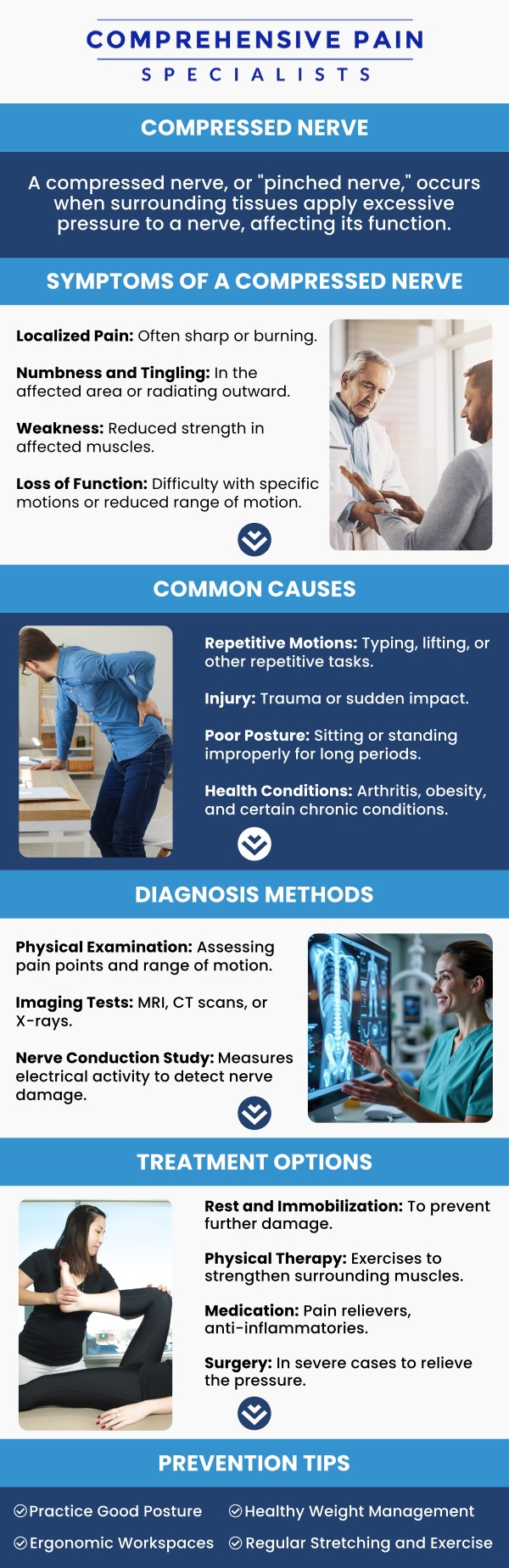
Table of Contents:
How long does it take to recover from pinched nerve treatment?
What is the recovery time for pinched nerve surgery?
How quickly can I return to normal activities after pinched nerve treatment?
Does the length of pinched nerve treatment vary by the severity of the condition?
Pinched Nerve Treatment Duration: What to Expect with Dr. Youssef Josephson, D.O.
At Comprehensive Pain Specialists, we understand that recovery from a pinched nerve can vary significantly from patient to patient. Your healing timeline depends on factors such as the severity of nerve compression, the underlying cause, the nerve’s location, and the specific treatment approach we design for you.
For many patients with mild cases, symptoms like pain, tingling, or numbness often begin to improve within a few days to a couple of weeks after starting conservative treatments.
If your nerve compression is more severe or has been present for a longer period, recovery may take several months. For patients who require surgical intervention, you may experience initial pain relief within days to weeks following the procedure. However, complete healing of the nerve—and full restoration of strength or sensation—can take several months as your body continues to recover.
If your symptoms persist beyond a few weeks or worsen at any point, please schedule a follow-up appointment. We will reassess your treatment plan and ensure that you receive the comprehensive, expert care you deserve.
The duration of recovery depends on several factors, such as which nerve is affected, the specific surgical technique used, your overall health, and how closely you follow your personalized post-operative care plan.
In general, most patients experience some pain and swelling for several days to a week after surgery. For minimally invasive procedures, many of our patients can safely return to light activities within a few weeks. However, if your surgery is more extensive, you may require a longer period of rest and rehabilitation.
Full recovery—including the return of strength and function—typically takes about four to six weeks for less complex cases. In situations where nerve damage is more severe or physical therapy is necessary, it may take up to three months or longer to fully recover.
The timeline for returning to your normal activities after treatment depends on several factors, including the severity of your symptoms, the underlying cause of nerve compression, your treatment plan, and how your body responds to care.
For many of our patients with mild pinched nerve symptoms, especially those managed with conservative treatments such as rest, physical therapy, anti-inflammatory medications, and activity modification, significant improvement is often noticed within a few days to a few weeks. If your symptoms are mild and improve quickly, our providers will guide you on gradually resuming your normal activities as your pain subsides. It’s important, however, to avoid movements or positions that initially triggered your symptoms.
For more moderate to severe pinched nerves, or when nerve compression is caused by issues like a herniated disc or bone spur, recovery may take several weeks to a few months. Physical therapy—often coordinated through our in-house rehabilitation services—plays a key role in regaining function and preventing recurrence.
If surgery becomes necessary to relieve nerve compression, the recovery period is typically longer. Most patients can return to light activities within a few weeks after surgery, but it may take several months before resuming strenuous activities or heavy lifting.
Regardless of your treatment path, the expert team at Comprehensive Pain Specialists is here to support your recovery every step of the way. We emphasize the importance of following your provider’s recommendations and listening to your body. Returning to activities too quickly can increase the risk of re-injury or prolonged symptoms. If you notice a return or worsening of symptoms as you increase your activity level, please contact our office promptly for further guidance.
At Comprehensive Pain Specialists, we understand that every patient’s experience with a pinched nerve is unique, and the length of treatment can vary greatly depending on the severity and underlying cause of the condition. For some patients, pinched nerve symptoms caused by mild inflammation or temporary compression may resolve within a few days to a few weeks with conservative treatments. These may include rest, physical therapy, anti-inflammatory medications, and targeted lifestyle modifications—all services we are equipped to provide and guide you through.
However, if your nerve compression is more severe, or if there is an underlying structural issue such as a herniated disc or bone spur, the recovery process may take several weeks to months. In such cases, our team offers advanced interventions, including image-guided corticosteroid injections, to help reduce inflammation and pain. When conservative measures are not effective, or if there is significant nerve impairment, we work closely with you to discuss the potential need for minimally invasive procedures or surgical options.
At Comprehensive Pain Specialists, our multidisciplinary approach ensures that your treatment plan is personalized to your specific needs. The duration of your recovery is influenced by factors such as the exact cause of nerve compression, the extent of the injury, your overall health, and how quickly treatment is initiated. That’s why we emphasize prompt evaluation and early intervention to achieve the best possible outcomes.
If you’ve been diagnosed with a pinched nerve, you may be wondering how long recovery will take and what your treatment journey will look like. At Comprehensive Pain Specialists, our dedicated team—including Dr. Youssef Josephson, D.O., and our specialists in musculoskeletal and neurological conditions—emphasizes that the duration of treatment for a pinched nerve can vary based on several factors. These include the location and severity of the nerve compression, your overall health, and how promptly you begin treatment.
Throughout your treatment at Comprehensive Pain Specialists, you will receive ongoing monitoring and support. Our multidisciplinary approach ensures your care is tailored to your unique needs, helping most patients achieve substantial relief and a return to normal activities as quickly and safely as possible.
If you’re experiencing symptoms of a pinched nerve or have concerns about your recovery, early evaluation and treatment at Comprehensive Pain Specialists can help speed your healing process and prevent long-term complications. Contact us today or schedule your consultation. We are located at 1177 PA-315, Dolphin Plaza, Wilkes-Barre, PA 18702. We serve patients from Wilkes-Barre PA, Glen Lyon PA, Dallas PA, Pittston PA, Mountain Top PA, Plymouth PA, and surrounding areas.
Check Out Our 5 Star Reviews


Additional Services You May Need
• Back Pain
• Neck Pain
• Joint Pain
• Shoulder Pain
• Hip Pain
• Knee Pain
• Arthritis
• Osteoarthritis
• Rheumatoid Arthritis
• Fibromyalgia
• Sciatica
• Complex Regional Pain Syndrome
• Neuropathic Pain
• Nerve Pain
• Diabetic Neuropathy
• Postherpetic Neuralgia
• Myofascial Pain Syndrome
• Headaches & Migraines
• Chronic Pain
• Failed Back Surgery
• Failed Neck Surgery
• Spinal Arthritis
• Aurora Zip
• Caudal Epidural Steroid Injection
• Cervical Epidural Steroid Injection
• Cervical Facet Radiofrequency Neurotomy
• Lumbar Radiofrequency Neurotomy
• Tenotomie
• Herniated Disc
• Bulging Disc
• Degenerative Disc Disease
• Spinal Stenosis
• Facet Joint Syndrome
• Pinched Nerve
• Spondylosis
• Spondyloisthesis
• Work-Related Injury
• Sports Injury
• Whipash
• Concussion
• Car Accident Injury
• Post-Surgical Pain
• Fracture-Related Pain
• Trigeminal Neuralgia
• Phantom Limb Pain
• Sacroiliac Joint Dysfunction
• Coccydynia
• Sacroiliac Joint Steroid Injection
• Vertiflex Superion Procedure
• Viadisc
• Head Injuries
• Muscle Spasm
• Lumbar Epidural Steroid Injection
• Medial Branch Block
• Sacroiliac Joint Fusions
• Rotator Cuff Tears
• Radiofrequency Ablation
• Migraine Botox

Additional Services You May Need
• Back Pain
• Neck Pain
• Joint Pain
• Shoulder Pain
• Hip Pain
• Knee Pain
• Arthritis
• Osteoarthritis
• Rheumatoid Arthritis
• Fibromyalgia
• Sciatica
• Complex Regional Pain Syndrome
• Neuropathic Pain
• Nerve Pain
• Diabetic Neuropathy
• Postherpetic Neuralgia
• Myofascial Pain Syndrome
• Headaches & Migraines
• Degenerative/Herniated Disc
• Bulging Disc
• Degenerative Disc Disease|
• Spinal Stenosis
• Facet Joint Syndrome
• Pinched Nerve
• Spondylosis
• Spondyloisthesis
• Work-Related Injury
• Sports Injury
• Whipash
• Concussion
• Car Accident Injury
• Post-Surgical Pain
• Fracture-Related Pain
• Trigeminal Neuralgia
• Phantom Limb Pain
• Sacroiliac Joint Dysfunction
• Coccydynia
• Chronic Pain
• Failed Back Surgery
• Failed Neck Surgery
• Spinal Arthritis
• Aurora Zip
• Caudal Epidural Steroid Injection
• Cervical Epidural Steroid Injection
• Cervical Facet Radiofrequency Neurotomy
• Lumbar Radiofrequency Neurotomy
• Tenotomie
• Sacroiliac Joint Steroid Injection
• Vertiflex Superion Procedure
• Viadisc
• Head Injuries
• Muscle Spasm
• Lumbar Epidural Steroid Injection
• Medial Branch Block
• Sacroiliac Joint Fusions
• Rotator Cuff Tears
• Radiofrequency Ablation
• Migraine Botox


 Send Text
 How May I Help You?