


What Is a Pinched Nerve and Why Does It Cause Pain?
At Comprehensive Pain Specialists, Dr. Youssef Josephson, DO uses advanced diagnostic tools and evidence-based treatments to identify the source of your nerve pain and develop a personalized plan to relieve your symptoms and improve your quality of life. If you’re experiencing sharp, burning, or persistent pain, our compassionate team is here to help you find lasting relief. For more information, contact us or book an appointment online. We are located at 1177 PA-315, Dolphin Plaza, Wilkes-Barre, PA 18702.
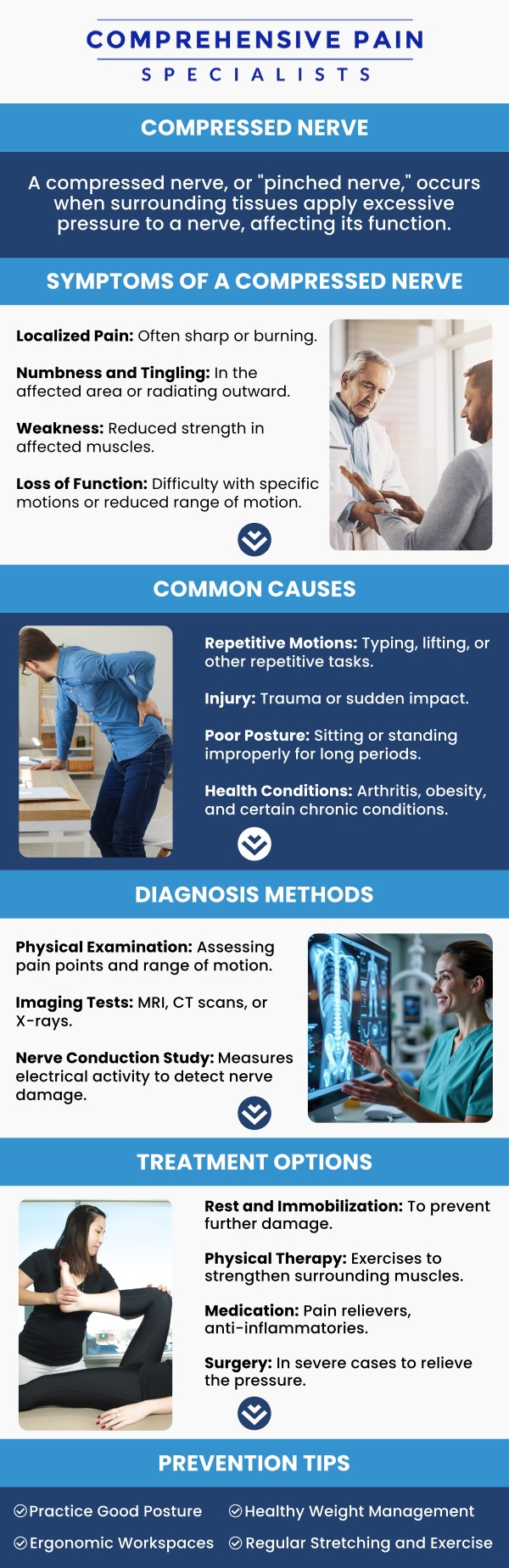
Table of Contents:
What exactly happens when a nerve becomes pinched?
Why does a pinched nerve cause sharp or burning pain?
Can a pinched nerve cause numbness or tingling sensations?
How does pressure on a nerve affect normal nerve signals?
Why Choose Dr. Youssef Josephson, DO and the Team at Comprehensive Pain Specialists for Pinched Nerve Treatment?
At Comprehensive Pain Specialists, our goal is to accurately diagnose and effectively treat the wide range of conditions that cause chronic pain—including pinched nerves, also known as nerve compression or entrapment. A pinched nerve occurs when excessive pressure from surrounding tissues such as bones, cartilage, muscles, or tendons disrupts the nerve’s normal function. This pressure can interfere with the nerve’s ability to transmit signals between your brain and body, leading to pain and other symptoms.
When a nerve is compressed, its blood supply may be reduced, causing inflammation and swelling, which can further intensify the symptoms. Common signs of a pinched nerve include pain, numbness, tingling, or weakness along the pathway of the affected nerve.
Pinched nerves can be caused by herniated discs, repetitive movements, arthritis, or trauma. Left untreated, chronic or severe compression can result in lasting nerve damage, which is why early diagnosis and treatment are vital.
A pinched nerve occurs when surrounding tissues—such as bones, cartilage, muscles, or tendons—apply excessive pressure to a nerve. This pressure disrupts the nerve’s normal function, often resulting in symptoms like sharp or burning pain.
Our team of pain management experts recognizes that these distinct sensations are rooted in the way nerves transmit signals. When a nerve is compressed, it can become irritated or inflamed, altering the electrical signals sent to the brain and signaling pain. Sharp pain typically arises when nerve fibers that carry fast, acute pain signals are affected, resulting in intense, sudden discomfort. Burning pain, by contrast, often occurs when nerve fibers responsible for slower, chronic pain are involved, leading to persistent tingling or burning sensations.
Inflammation from nerve compression can also cause chemical changes around the nerve, further intensifying pain. The type and severity of pain often depend on the location and extent of the nerve compression, but both sharp and burning sensations are common responses to disrupted nerve function.
Numbness or tingling caused by pinched nerves develops when excessive pressure is placed on a nerve by surrounding tissues such as bones, cartilage, muscles, or tendons. The result is disruption of the nerve’s normal function, which can produce a range of symptoms.
Numbness and tingling are among the most common complaints associated with a pinched nerve. These sensations often appear in the specific area of the body served by the affected nerve. For example, a pinched nerve in the neck may cause tingling or numbness in the arms or hands, while one in the lower back can lead to similar symptoms in the legs or feet. In addition to numbness and tingling, patients may also experience pain, muscle weakness, or a “pins and needles” feeling.
At Comprehensive Pain Specialists, our team is dedicated to identifying the root cause of your symptoms and developing a personalized treatment plan.
Nerve compression—when a nerve is subjected to abnormal pressure—can significantly disrupt your daily life. Under normal conditions, nerves efficiently transmit electrical impulses to coordinate movement, sensation, and vital body functions. However, when a nerve becomes compressed, this essential communication can be interrupted.
Nerve compression may result from conditions such as herniated discs, spinal stenosis, carpal tunnel syndrome, or injuries. When pressure is applied, it can alter the nerve’s structure and interfere with the rapid transmission of signals. Additionally, reduced blood flow to the compressed area can deprive the nerve of oxygen and necessary nutrients, further impairing its function.
As a result, you may experience symptoms like numbness, tingling, burning sensations, weakness, or persistent pain—common reasons patients seek our care. If left untreated, chronic compression can damage the nerve’s protective covering (the myelin sheath), leading to ongoing dysfunction or even permanent nerve injury.
At Comprehensive Pain Specialists, our team is dedicated to identifying the underlying cause of your nerve compression and designing a personalized treatment plan. Early intervention is crucial to relieve pressure, restore normal nerve signaling, and help you regain your quality of life.
At Comprehensive Pain Specialists, Dr. Youssef Josephson, DO and his dedicated team prioritize restoring your quality of life through individualized care. We understand that nerve compression is more than just a physical ailment; it’s a barrier to your daily activities.
Our providers utilize a multidisciplinary approach to diagnose and treat the root cause of your discomfort. From advanced Endoscopic Rhizotomy and Epidural Steroid Injections to Spinal Cord Stimulation, we offer the latest minimally invasive procedures designed to alleviate pressure and reduce inflammation. Our goal is to provide effective, non-surgical relief tailored specifically to your unique recovery needs.
If you are experiencing symptoms of nerve compression, we encourage you to contact our office for a comprehensive evaluation and professional care. For more information, contact us or book an appointment online. We are located at 1177 PA-315, Dolphin Plaza, Wilkes-Barre, PA 18702. We serve patients from Wilkes-Barre PA, Glen Lyon PA, Dallas PA, Pittston PA, Mountain Top PA, Plymouth PA, and surrounding areas.
Check Out Our 5 Star Reviews


Additional Services You May Need
• Back Pain
• Neck Pain
• Joint Pain
• Shoulder Pain
• Hip Pain
• Knee Pain
• Arthritis
• Osteoarthritis
• Rheumatoid Arthritis
• Fibromyalgia
• Sciatica
• Complex Regional Pain Syndrome
• Neuropathic Pain
• Nerve Pain
• Diabetic Neuropathy
• Postherpetic Neuralgia
• Myofascial Pain Syndrome
• Headaches & Migraines
• Chronic Pain
• Failed Back Surgery
• Failed Neck Surgery
• Spinal Arthritis
• Aurora Zip
• Caudal Epidural Steroid Injection
• Cervical Epidural Steroid Injection
• Cervical Facet Radiofrequency Neurotomy
• Lumbar Radiofrequency Neurotomy
• Tenotomie
• Herniated Disc
• Bulging Disc
• Degenerative Disc Disease
• Spinal Stenosis
• Facet Joint Syndrome
• Pinched Nerve
• Spondylosis
• Spondyloisthesis
• Work-Related Injury
• Sports Injury
• Whipash
• Concussion
• Car Accident Injury
• Post-Surgical Pain
• Fracture-Related Pain
• Trigeminal Neuralgia
• Phantom Limb Pain
• Sacroiliac Joint Dysfunction
• Coccydynia
• Sacroiliac Joint Steroid Injection
• Vertiflex Superion Procedure
• Viadisc
• Head Injuries
• Muscle Spasm
• Lumbar Epidural Steroid Injection
• Medial Branch Block
• Sacroiliac Joint Fusions
• Rotator Cuff Tears
• Radiofrequency Ablation
• Migraine Botox

Additional Services You May Need
• Back Pain
• Neck Pain
• Joint Pain
• Shoulder Pain
• Hip Pain
• Knee Pain
• Arthritis
• Osteoarthritis
• Rheumatoid Arthritis
• Fibromyalgia
• Sciatica
• Complex Regional Pain Syndrome
• Neuropathic Pain
• Nerve Pain
• Diabetic Neuropathy
• Postherpetic Neuralgia
• Myofascial Pain Syndrome
• Headaches & Migraines
• Degenerative/Herniated Disc
• Bulging Disc
• Degenerative Disc Disease|
• Spinal Stenosis
• Facet Joint Syndrome
• Pinched Nerve
• Spondylosis
• Spondyloisthesis
• Work-Related Injury
• Sports Injury
• Whipash
• Concussion
• Car Accident Injury
• Post-Surgical Pain
• Fracture-Related Pain
• Trigeminal Neuralgia
• Phantom Limb Pain
• Sacroiliac Joint Dysfunction
• Coccydynia
• Chronic Pain
• Failed Back Surgery
• Failed Neck Surgery
• Spinal Arthritis
• Aurora Zip
• Caudal Epidural Steroid Injection
• Cervical Epidural Steroid Injection
• Cervical Facet Radiofrequency Neurotomy
• Lumbar Radiofrequency Neurotomy
• Tenotomie
• Sacroiliac Joint Steroid Injection
• Vertiflex Superion Procedure
• Viadisc
• Head Injuries
• Muscle Spasm
• Lumbar Epidural Steroid Injection
• Medial Branch Block
• Sacroiliac Joint Fusions
• Rotator Cuff Tears
• Radiofrequency Ablation
• Migraine Botox


 Send Text
 How May I Help You?